

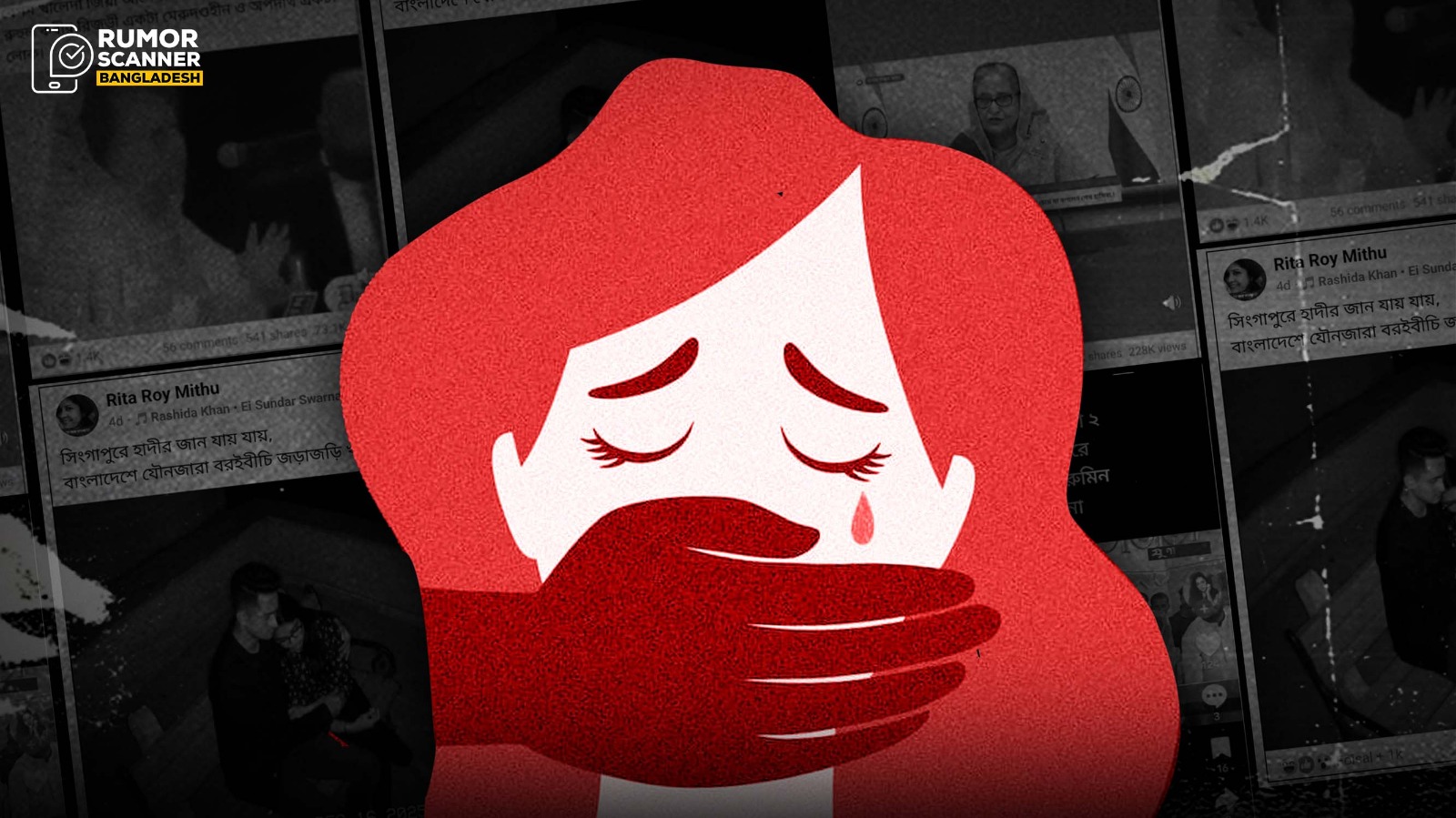
In the digital age, while information travels at lightning speed, the spread of misinformation has become equally aggressive. Every day, social media is flooded with a relentless stream of claims, images, and videos—a significant portion of which deliberately targets women. By distorting their statements or weaponizing old visuals out of context, these false narratives weave a web of confusion and controversy designed to fuel negative perceptions. Recent data from Rumor Scanner highlights the gravity of this trend: between December 2025 and February 2026, out of 2,023 identified instances of misinformation, 472 specifically targeted women. This means nearly 23% of all debunked claims were aimed at portraying women in a damaging light. Such a trend does more than just tarnish individual reputations; it actively seeks to undermine and question the very presence of women in the public sphere.
As we approach International Women’s Day on March 8, these findings serve as a stark reminder that in our connected world, safeguarding the dignity and security of women requires a commitment to awareness and responsible digital citizenship.
Political Arenas: The Primary Battleground for Misinformation Against Women
In the wake of the mass uprising on August 5, 2024, former Prime Minister and Bangladesh Awami League President Sheikh Hasina fled the country after being ousted from power. Since her departure, no authentic new images or videos of her have surfaced in the public eye. While her party activists and supporters have primarily relied on occasional audio messages as their only point of contact, social media has been flooded with a different story. Deceptive videos frequently go viral, falsely claiming to show her delivering live addresses from India.
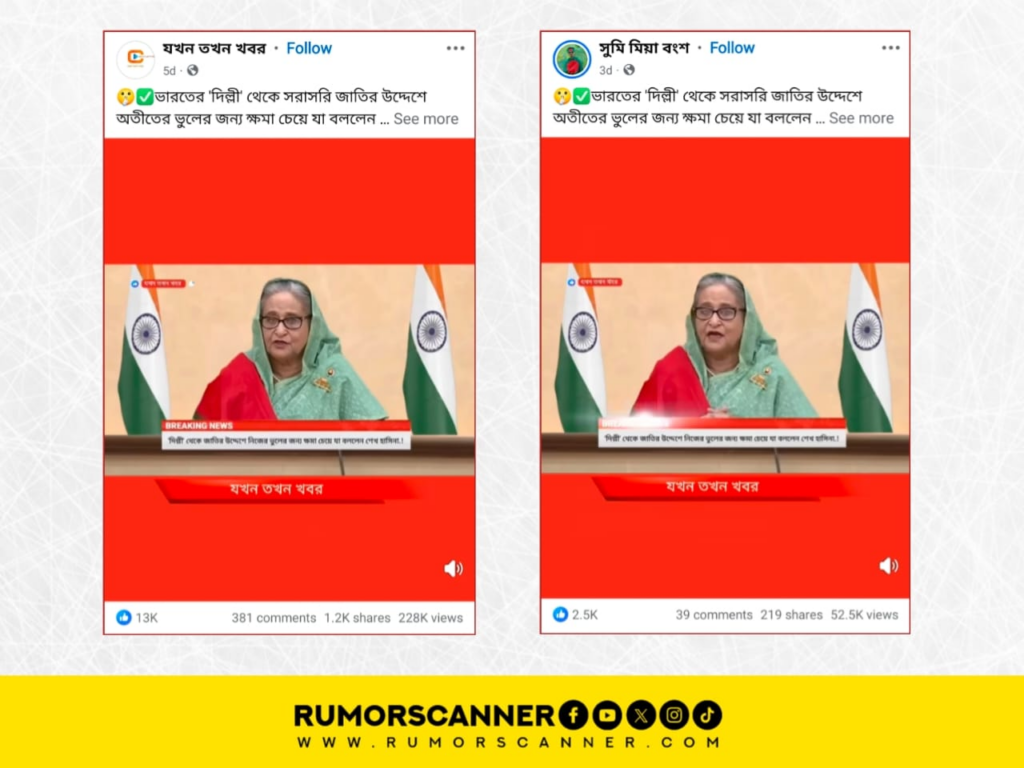
In reality, these circulate as sophisticated edits of old footage rebranded with fresh, misleading claims. We have seen a pattern of archival protest videos being recirculated as if they were recent rallies or slogans in support of Sheikh Hasina and her party affiliates. Beyond simple edits, the digital landscape has been flooded with AI-generated content, forged photocards, and satirical posts presented as absolute fact—all in a strategic attempt to maintain her digital presence. Over the last three months, 124 instances of disinformation were identified surrounding the former Prime Minister; interestingly, nearly 84% of these were designed to portray her in a positive light. This marks the highest volume of disinformation centered on a single female figure in the country during this period.
Similarly, the health of three-time former Prime Minister and BNP Chairperson Begum Khaleda Zia, who passed away on December 30 last year while undergoing treatment, became a magnet for digital rumors. Throughout her final years of recurring illness, her physical condition was constantly shrouded in speculation. Following her last hospital admission on November 23, the digital space was plagued by a relentless cycle of death hoaxes and unverified reports, turning her medical struggle into a centerpiece of the information war.
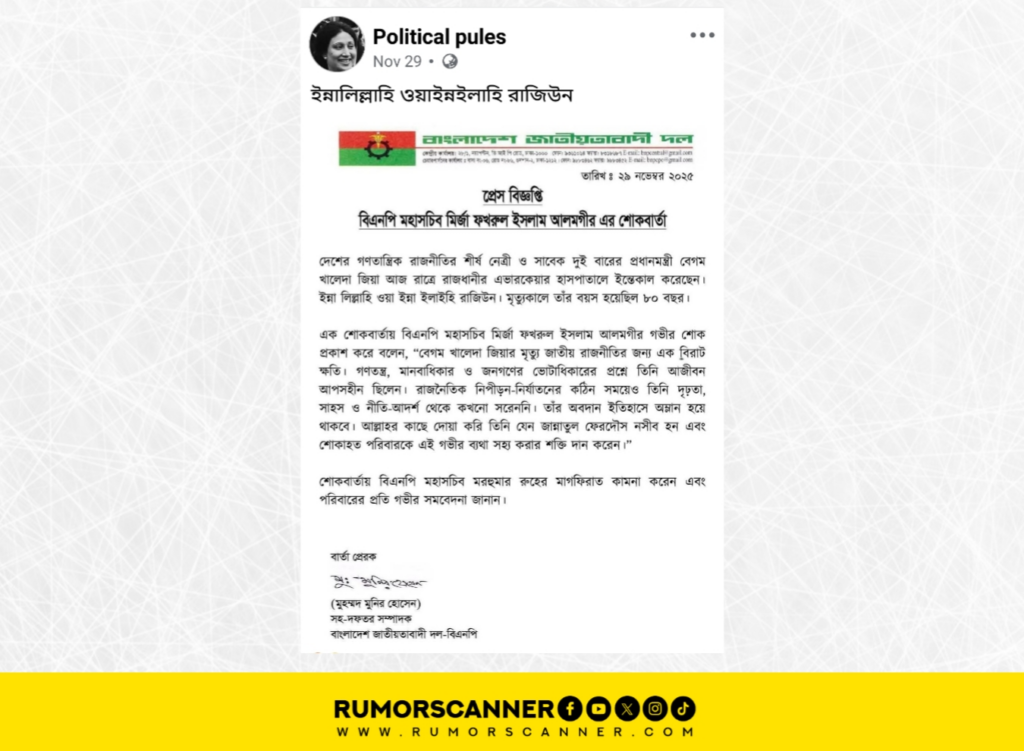
In December, Rumor Scanner identified 35 instances of disinformation regarding her illness and subsequent passing. Over the last three months, a total of 57 false claims circulated about the former Prime Minister, with approximately 53% of those posts attempting to portray her in a positive light.
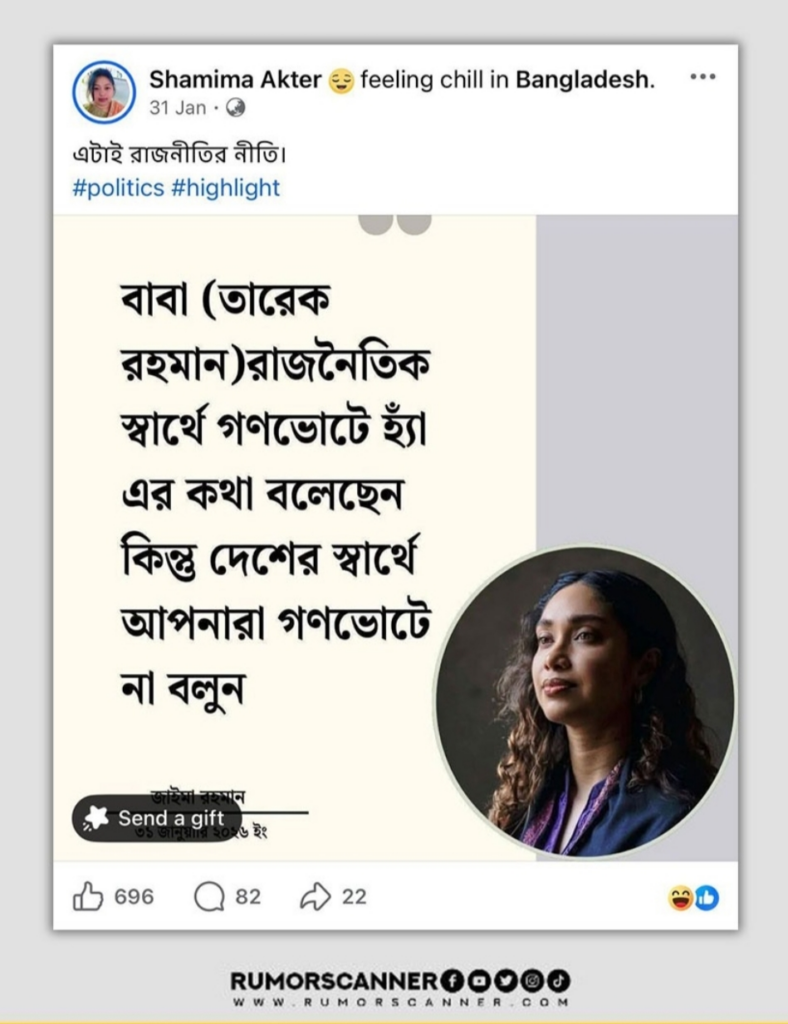
Similarly, in late January, a fabricated photocard surfaced featuring Zaima Rahman, daughter of current Prime Minister Tarique Rahman, with a caption claiming she said: “My father has called for a ‘Yes’ vote for political interests, but for the sake of the country, you must vote ‘No’.” Upon investigation, Rumor Scanner traced the origin of this claim to a Facebook page dedicated to satire and entertainment. However, the post quickly spiraled out of control, spreading across social media as a factual statement without any disclaimer, illustrating how easily political satire is weaponized into digital deception.
The inclusion of women in Bangladeshi politics has always been viewed as a formidable challenge. Although Zaima Rahman has not officially entered the political fray, her presence has been increasingly visible in various social, political, and diplomatic circles since returning to the country with her father last December. Consequently, the disinformation mill has shifted into high gear; while her name appeared in only five debunked reports before December, that number skyrocketed to 41 over the last three months. Rumor Scanner’s analysis reveals a pointed agenda behind this surge, with approximately 54% of these false claims specifically designed to cast her in a negative light.
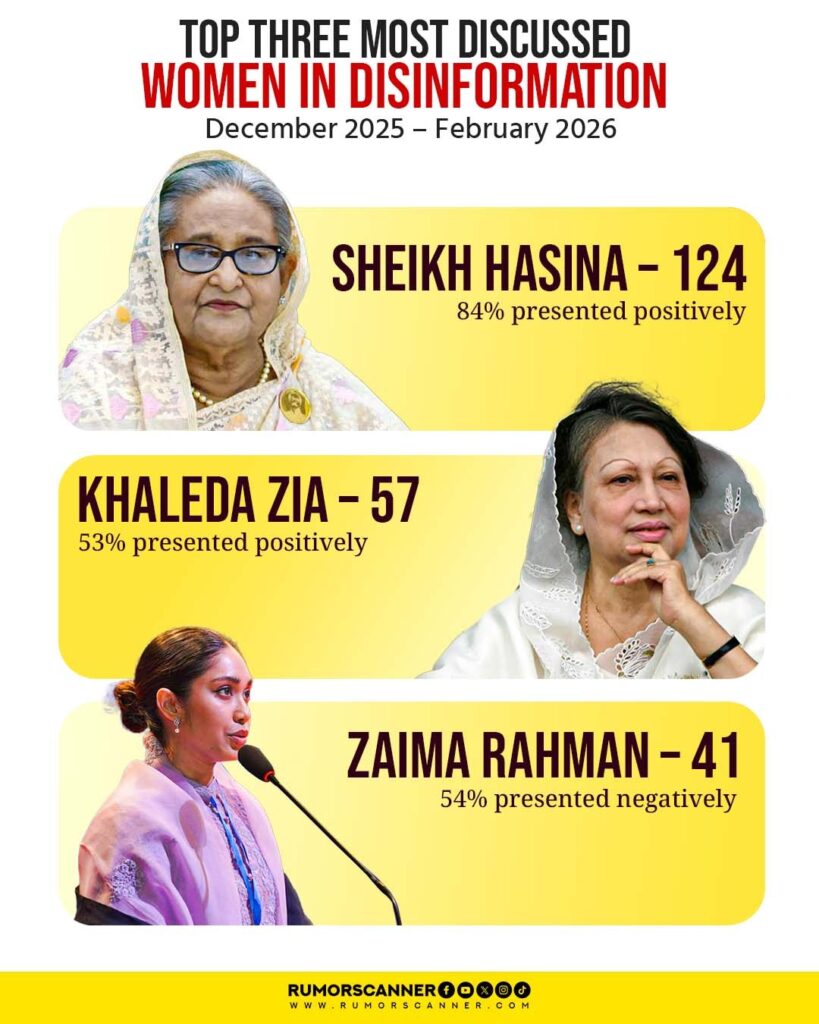
In summary, between December last year and February this year, 26 female politicians have been the targets of 330 instances of disinformation.
Women in the Electoral Arena: Soft Targets for Smear Campaigns
In the Bangladeshi political landscape, the challenge for female candidates extends far beyond mere competition; they must also navigate a minefield of strategically orchestrated disinformation. During election cycles, their personal lives, political credentials, and social standings are frequently targeted through a barrage of rumors, forged photocards, and AI-generated content. Following the 13th National Parliamentary Election held on February 12, Rumor Scanner identified that at least three prominent female candidates were the focus of 26 separate instances of disinformation over the preceding three months. This included 13 false claims targeting independent candidate Tasnim Jara in the Dhaka-9 constituency, 8 targeting independent candidate Rumeen Farhana in Brahmanbaria-2, and 3 directed at the BNP’s Shama Obayed in Faridpur-2.
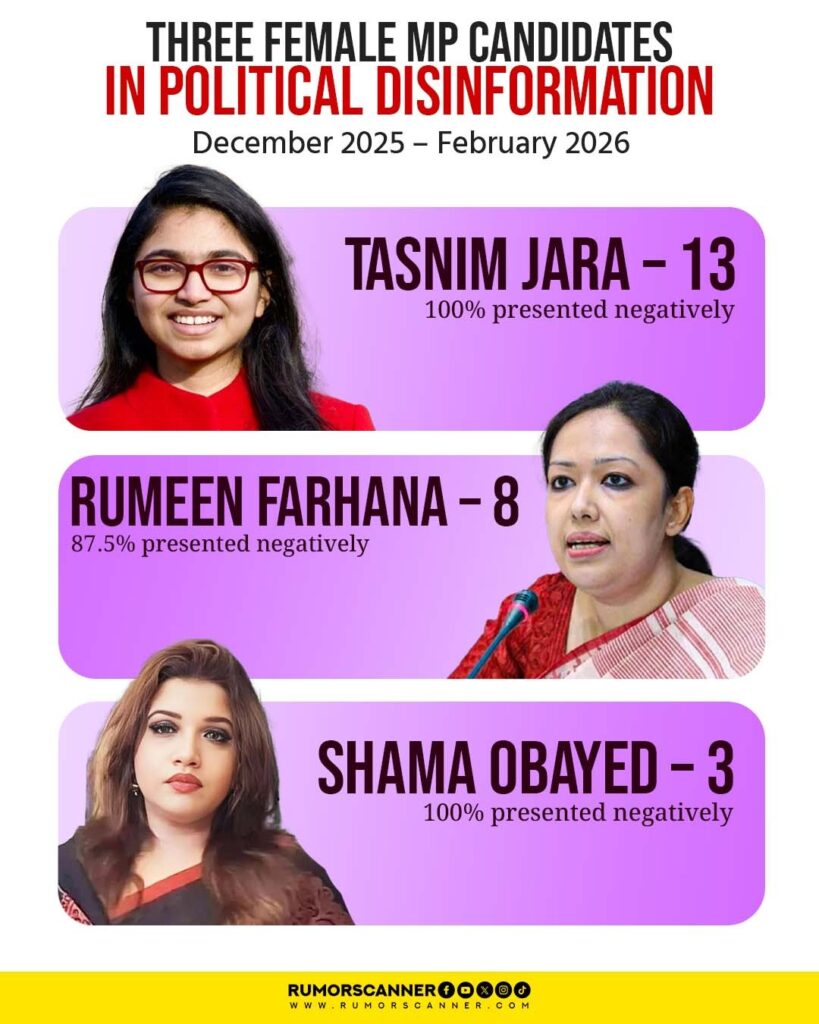
The surge of misinformation did not stop with those on the ballot; women who intended to run but later withdrew were also systematically targeted. Among them, Dr. Mahmuda Mitu, Central Joint Member Secretary of the National Citizen Party (NCP), was the subject of eight debunked reports over the last three months. Dr. Mitu had initially collected nomination papers for the Jhalakathi-1 constituency but later withdrew to support Faizul Haque, a candidate from the Jamaat alliance. Similarly, Shagufta Bushra Mishma, another Central Joint Member Secretary of the NCP, faced a coordinated rumor during the same period after deciding not to contest the Chattogram-10 seat in alignment with her party’s strategic decisions.
The nature of these attacks is particularly alarming. Beyond standard political spin, these campaigns frequently devolved into highly offensive and fabricated content designed to inflict maximum damage on their personal and professional reputations. These findings underscore a grim reality: in the high-stakes environment of an election, women remain the most vulnerable targets of character assassination. The sheer intensity, diversity, and viral speed of the disinformation leveled against them highlight a coordinated effort to undermine their legitimacy in the public eye.
Digital Spotlight, Real Risk: Female Stars in the Crosshairs
In Bangladesh’s digital landscape, women in the entertainment industry have become prime targets for the relentless machinery of disinformation. Their names, identities, and images are frequently hijacked to fuel deceptive or outright fabricated content—the vast majority of which is disseminated through forged photocards. Over the last three months, Rumor Scanner has identified at least 18 instances of disinformation involving 15 female celebrities. These targeted campaigns represent a significant threat, as digital platforms are increasingly weaponized to exploit the public’s fascination with fame to spread falsehoods.

Leading this list is actress Pori Moni, who was targeted by a staggering four instances of disinformation. The reach of these digital attacks is extensive, claiming victims across the industry including Toma Mirza, Tania Brishty, Mehazabien Chowdhury, Sadia Ayman, Sabnam Faria, Apu Biswas, Mahiya Mahi, Azmeri Haque Badhon, Orchita Sporshia, Sabila Nur, Purnima, Simrin Lubaba, Suborna Mustafa, and Meher Afroz Shaon—each facing at least one documented case of defamation or fake news.
This pattern underscores a sobering reality: in the digital age, a woman’s prominence in the entertainment world is no longer just a symbol of success, but a lightning rod for vulnerability. These stars find themselves on the front lines of an information war, where their reputations are constantly at risk from the rapid-fire spread of digital falsehoods.
Women: The Face of 36% of Sectarian Disinformation
In December, a chilling video surfaced on social media showing two women being brutally assaulted with chairs. The footage was weaponized with the claim that Muslim girls in Bangladesh were being attacked by their own community for refusing to wear the burqa or hijab. Originally amplified by an India-based X (formerly Twitter) account, the post exploded across digital platforms in a matter of hours; a single upload of the video garnered a staggering 2.7 million views. This incident highlights a disturbing trend where women’s bodies and safety are used as props to fuel communal tensions and cross-border narratives.

However, a verification by Rumor Scanner revealed that the video was actually from an incident on December 16 at the Victory Fair in Chattogram. The physical altercation involving the two women was sparked by a dispute over food service and had absolutely no connection to religious attire or communal tensions.
This is part of a broader, more systemic issue. Over the last three months, Rumor Scanner identified 47 instances of communal propaganda, and in approximately 36% of these cases (17 incidents), women were used as the central figures to drive the narrative. These fabricated stories often circulate between Bangladesh and India. Analysis further reveals that roughly 82% of these sectarian rumors involving women were propagated by social media accounts and pages identifying as Indian.
When women are cast as the victims in sectarian disinformation, it acts as a powerful emotional trigger, causing the content to go viral almost instantly. This does far more than damage the reputations of those involved; it actively stokes religious and social polarization. Cross-border misinformation of this nature not only misleads the public in both countries but also fuels a dangerous cycle of online tension and deep-seated mistrust.
From Irrelevant Claims to AI Edits: No Escape for Women
Even high-ranking officials are not spared from the relentless wave of digital deception. Former Environment Advisor Syeda Rizwana Hasan, despite her focus on climate and nature, has repeatedly faced disinformation linking her to birth control policies—a subject entirely outside her ministerial jurisdiction. Over the last three months alone, at least four such instances of disinformation were identified, where unrelated issues were deliberately tethered to her name to spark confusion. According to data from Rumor Scanner, a total of 11 false claims involving her were debunked during this period. This pattern reveals a clear and persistent trend: throughout her tenure, she has been a consistent target of irrelevant and offensive content designed to obstruct her professional responsibilities and undermine her public standing.
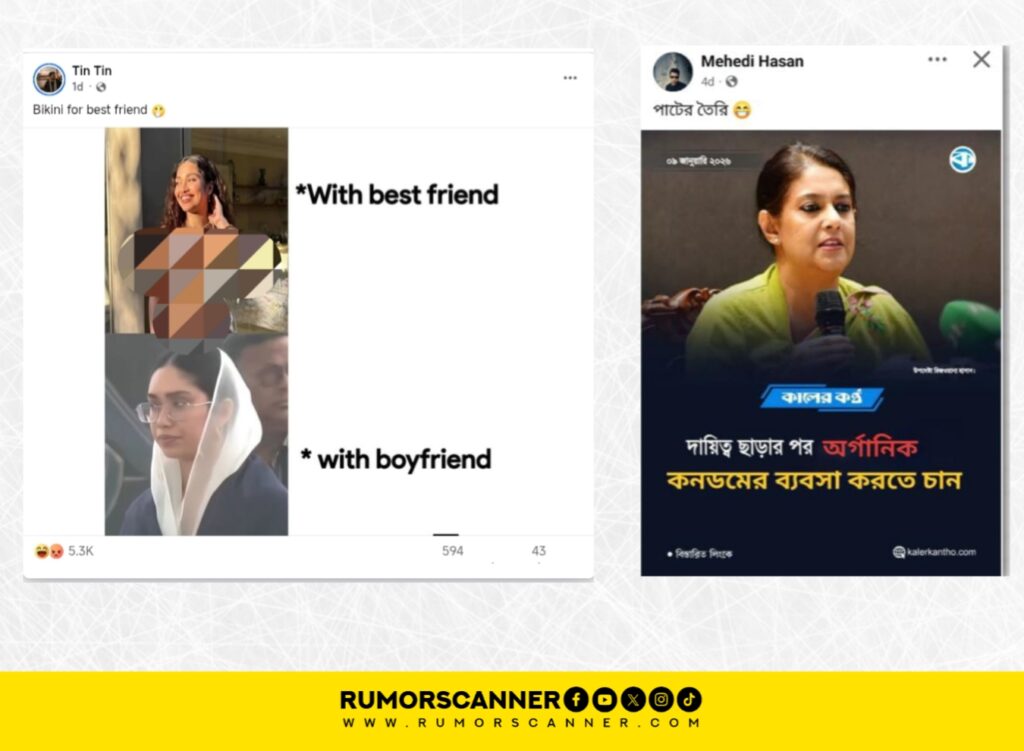
On the other hand, a far more sinister trend is taking hold in Bangladesh’s digital space: the manipulation of women’s photos and videos into explicit adult content. This reprehensible tactic is being weaponized with increasing frequency to humiliate political opponents or strip them of their influence.
Over the last three months, several prominent figures—including Zaima Rahman, Dr. Mahmuda Mitu, NCP leader Jannat Ara Rumi, and Tasnim Jara—have fallen victim to such targeted attacks. In many instances, adult videos of unrelated individuals are circulated with the malicious claim that they feature a specific female politician. Just this past February, NCP leader Nusrat Tabassum was also targeted by such fabricated content. These incidents signal a disturbing reality: character assassination through digital manipulation has become a primary tool to silence and marginalize women in the public sphere.
Methodology
To compile these statistics, we conducted a comprehensive analysis of the reports published on the Rumor Scanner website from December 2025 through February of this year. By meticulously documenting and reviewing each fact-check, we categorized the findings to present a clear and data-driven overview of the current misinformation landscape.